

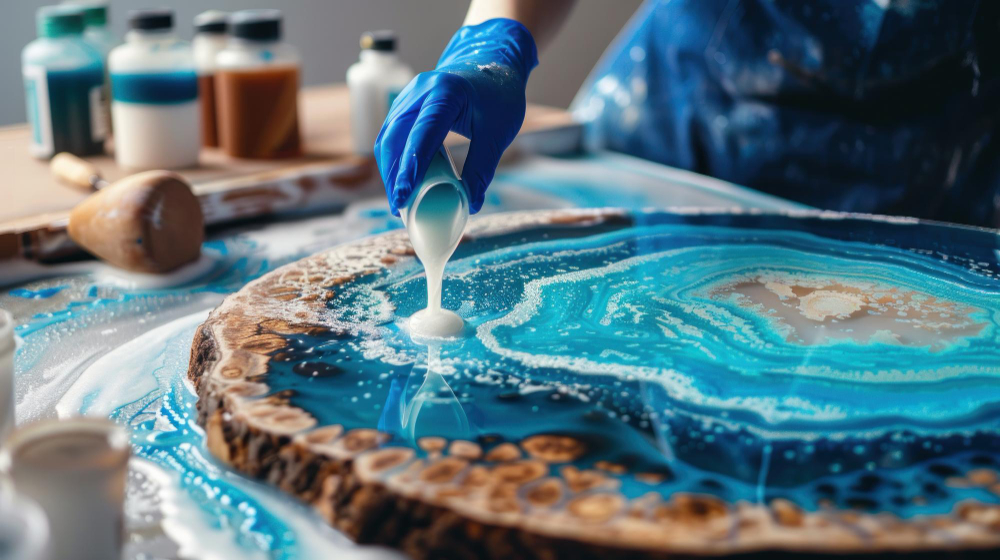
Safety Precautions for Epoxy Resin Use
- Wear Personal Protective Equipment (PPE)
Gloves: Use chemical-resistant gloves (e.g., nitrile gloves) to prevent skin contact.
Eye protection: Wear safety goggles or glasses to avoid splashes in your eyes.
Respirator or Mask: Use a respirator mask if working in poorly ventilated areas, especially if sanding or sanding dust is involved, or if fumes are noticeable.
Protective Clothing: Wear long sleeves and an apron to minimize skin exposure.
Work in a Well-Ventilated Area:
Ensure adequate airflow to disperse fumes and vapors.
Use exhaust fans or work outdoors if possible.
Avoid Skin Contact:
Do not touch uncured epoxy resin with your bare skin. If contact occurs, wash immediately with soap and water.
Handle with Care:
Mix and pour carefully to avoid spills or splashes.
Keep containers closed when not in use.
Storage:
Store epoxy resin and hardener in a cool, dry place, away from children, pets, and heat sources.
Keep containers tightly sealed.
Disposal:
Dispose of unused resin and contaminated materials according to local hazardous waste regulations.
Do not pour epoxy down drains or into the environment.
First Aid:
In case of skin contact, wash immediately with soap and water.
If epoxy gets into the eyes, rinse immediately with plenty of water and seek medical attention.
If inhaled and you experience dizziness or respiratory irritation, move to fresh air immediately.
How Temperature Affects Epoxy Curing Time
- Higher Temperatures (Warm Environment):
Accelerates the chemical reaction between resin and hardener.
Reduces the curing time, meaning the epoxy will set and cure faster.
Typically, at temperatures above 77°F (25°C), curing can be significantly faster, sometimes within a few hours.
Be cautious: very high temperatures can cause bubbling or exothermic heat buildup, which can lead to cracks or distortions.
Lower Temperatures (Cool Environment):
Slows down the chemical reaction.
Prolongs the curing time, which might mean waiting several days for full cure.
Cold environments can cause the resin to remain sticky or insufficiently cured for longer periods.
Optimal Temperature Range
Most epoxy resins cure best at room temperature (around 70–77°F or 21–25°C).
Some products are formulated to cure at lower or higher temperatures, so check the manufacturer’s guidelines.
Practical Tips
Use heat sources: If working in a cold environment, gentle heat (like a heat gun, heating pad, or warm room) can help speed up curing.
Avoid high heat: Excessive heat can cause problems like bubbles, distortion, or exothermic runaway.
Consistent temperature: Keep the environment stable during curing to ensure even curing and avoid defects.